Bathing a dog looks simple enough: wet, lather, rinse, dry. But the technique behind each of those steps matters more than most owners realize, and the step people rush most — rinsing — is the one most likely to cause problems afterward. Done well, a bath leaves your dog's skin and coat genuinely healthier. Done poorly, it can leave behind residue that causes the exact itching and irritation a bath was supposed to prevent.
Why Bathing Technique Matters
A dog's skin has a different pH balance and oil composition than human skin, and both the products you use and the way you use them affect how well that balance is maintained. Water that's too hot can dry out skin. Shampoo that isn't fully rinsed leaves a residue that attracts dirt and can irritate sensitive skin. Even the order of steps — brushing before wetting, for example — changes how effective the bath actually is at cleaning down to the skin rather than just the surface of the coat.
How Often Should You Bathe Your Dog?
- Most dogs do well with a bath every 4–6 weeks — frequent enough to manage odor and shedding, infrequent enough to avoid drying out the skin.
- Dogs with oilier skin or skin conditions may need more frequent bathing — ask your vet or groomer for a specific recommendation.
- Very active dogs who swim or get muddy often may need more frequent baths, but should use a gentle shampoo to avoid over-drying skin.
- Puppies should be bathed less often than adults, using a tear-free, puppy-safe shampoo, until their skin barrier is fully developed.
Step-by-Step: A Proper At-Home Bath
- Brush thoroughly before wetting your dog — water tightens mats and makes them much harder to remove afterward.
- Use lukewarm water, tested on your wrist the way you would for a baby — too hot dries out skin, too cold is simply unpleasant.
- Wet the coat fully down to the skin, not just the surface, before applying any shampoo.
- Apply shampoo starting at the neck and working back, keeping well away from the eyes, ears, and nose.
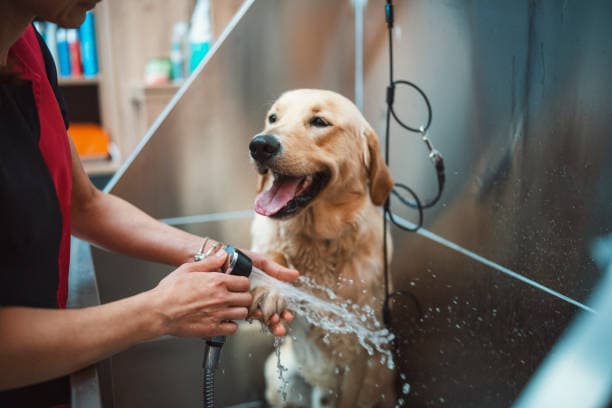
- Rinse thoroughly — far more thoroughly than feels necessary — until the water runs completely clear with no slip or suds left in the coat.
- Apply conditioner if your dog's coat type benefits from it, then rinse again just as thoroughly.
- Towel off excess water, then fully dry with a dryer on a dog-safe setting, brushing as you go to prevent the coat from drying into tangles.
“If you think you've rinsed enough, rinse for another thirty seconds — leftover shampoo residue is the single biggest cause of post-bath itching we see.”
Water Temperature and Rinsing: The Detail Most Owners Skip
Shampoo residue left in the coat doesn't just look fine and disappear — it dries onto the skin and can cause flaking, itching, and irritation that owners often mistake for a completely separate skin problem. This is especially true for dogs with dense or double coats, where it's easy to feel like the surface is rinsed while product is still sitting close to the skin underneath. When in doubt, keep rinsing. There's very little risk in over-rinsing and a real cost to under-rinsing.
Common At-Home Bathing Mistakes
- Skipping the pre-bath brush-out, which lets mats tighten and makes the eventual brush-out afterward much harder.
- Using human shampoo, which is formulated for a different skin pH and can dry out a dog's skin over time.
- Rushing the rinse, leaving residue that causes itching days later, long after the bath itself is forgotten as the cause.
- Letting a double-coated dog air dry, which often leaves the undercoat damp and can lead to a musty smell or matting.
When to Leave It to the Professionals
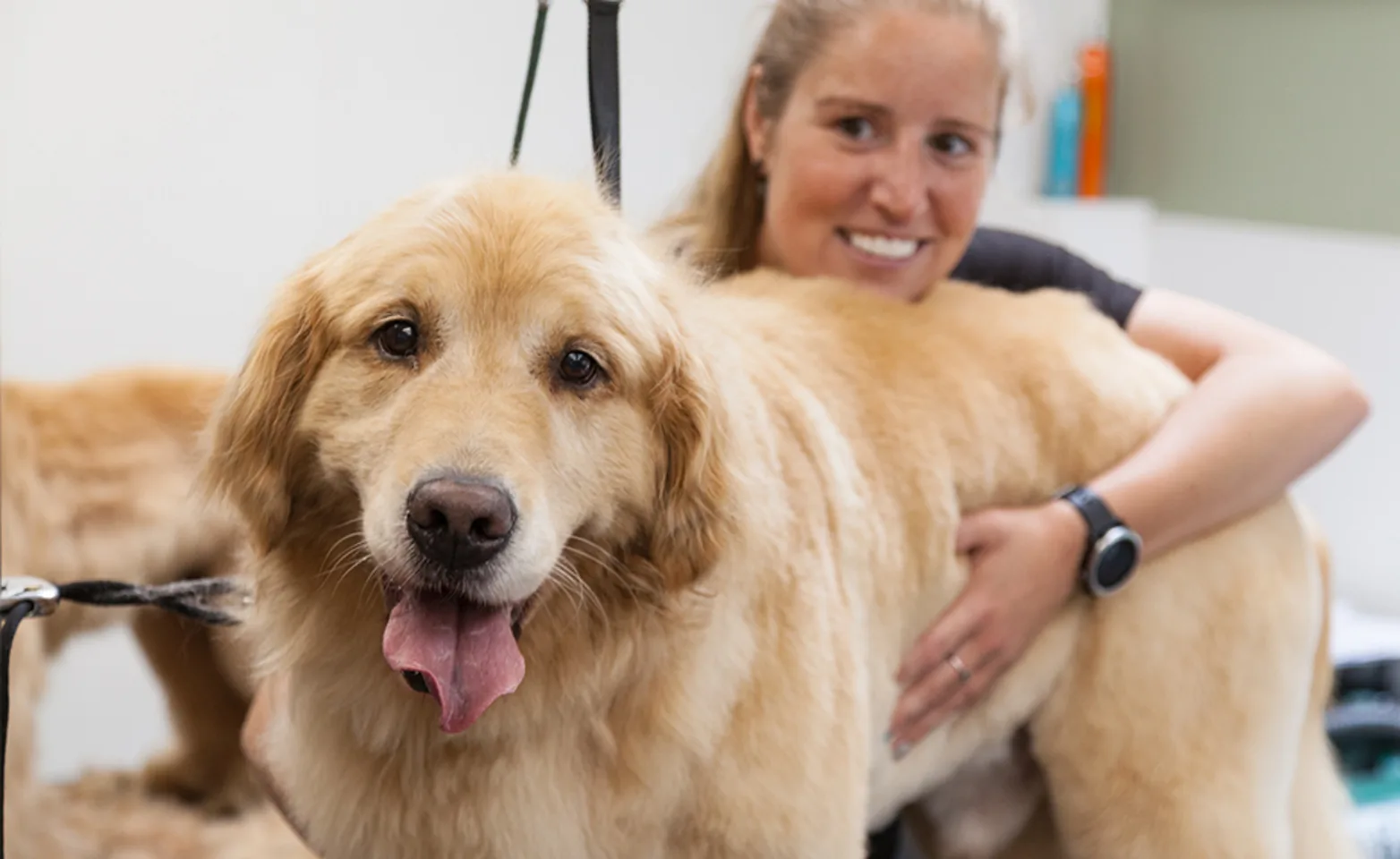
A basic at-home bath is a great routine between grooming visits, but there are times it's worth leaving to a professional groomer: dogs with skin conditions that need a medicated shampoo applied a specific way, heavily matted coats where bathing without proper prep can make mats worse, and anxious or large dogs who are difficult to safely handle solo in a home tub. A full professional groom also includes the brush-out, nail trim, and ear cleaning that a home bath alone doesn't cover.
Key Takeaways
- Brush before you bathe — water tightens mats and makes them harder to remove.
- Rinsing thoroughly matters more than most owners expect — residue is the top cause of post-bath itching.
- Every 4–6 weeks is a reasonable default bathing frequency for most adult dogs.
- Skip human shampoo — it's formulated for a different skin pH than dogs have.